How to Integrate CNC and Laser Systems for Complex Projects
Modern manufacturing is no longer dependent on a single production technology. Complex industrial components often require multiple fabrication processes before reaching their final form. Cutting, drilling, bending, engraving, machining, and finishing must work together in a coordinated workflow to achieve the required quality and precision.
This is where the integration of CNC and laser systems becomes valuable. Instead of treating both machines as separate production units, manufacturers can create an interconnected workflow that improves efficiency, minimizes material handling, and maintains consistent quality throughout the manufacturing cycle.
For businesses producing intricate components or customized products, combining CNC machining with laser technology can significantly improve operational performance.
Understanding the Role of Each Technology
Before integrating equipment, it is important to understand the strengths of both systems.
CNC machines specialize in controlled mechanical operations such as milling, drilling, routing, and shaping materials according to programmed instructions.
Laser systems, on the other hand, perform non-contact processing by using concentrated light energy for cutting, marking, engraving, or surface treatment.
When both technologies are organized into a unified production sequence, manufacturers gain greater flexibility in handling complex fabrication tasks.
Begin with Process Mapping
Successful integration starts long before equipment is installed.
Every manufacturing project should be analyzed to identify:
- production stages
- machining requirements
- laser processing requirements
- inspection checkpoints
- material movement
Developing a complete process map helps eliminate unnecessary operations and creates a smoother manufacturing flow.
Create a Logical Production Sequence
One of the biggest mistakes manufacturers make is arranging machines based only on available floor space.
Instead, equipment should be positioned according to production flow.
An organized sequence minimizes:
- unnecessary transportation
- operator movement
- waiting time
- material congestion
A properly planned workflow contributes to faster production without increasing labor requirements.
Standardize Digital Design Files
Both CNC and laser systems depend on accurate digital data.
Maintaining standardized file formats helps ensure that every production stage uses the same engineering information.
This reduces:
- programming inconsistencies
- dimensional variations
- communication errors
- production delays
Consistent digital documentation becomes especially valuable when handling customized or repeat orders.
Coordinate Machine Programming
Programming should not be treated as two separate activities.
Instead, CNC machining instructions and laser processing parameters should be developed together so each operation complements the next.
Coordinated programming improves:
- production accuracy
- machining efficiency
- dimensional consistency
- overall workflow reliability
Reduce Manual Material Transfers
Frequent movement of components between machines increases handling time and introduces opportunities for positioning errors.
Manufacturers can improve productivity by introducing:
- roller transfer systems
- automated carts
- robotic handling equipment
- integrated loading stations
Reducing unnecessary handling also minimizes the possibility of component damage.
Implement Centralized Production Monitoring
Modern manufacturing benefits from centralized information rather than isolated machine data.
Production monitoring software can collect information from multiple systems to provide visibility into:
- machine utilization
- production progress
- maintenance status
- operational efficiency
This allows supervisors to make faster decisions and identify workflow improvements.
Maintain Consistent Quality Standards
Every operation influences the next manufacturing stage.
A dimensional variation created during machining can affect laser processing accuracy later in production.
Introducing quality verification between critical operations helps detect issues before they progress through the workflow.
Routine inspection supports:
- dimensional consistency
- repeatable production
- reduced rework
- improved customer satisfaction
Prepare Operators for Multi-System Manufacturing
Integrated production environments require operators who understand how different technologies interact.
Training should include:
- CNC fundamentals
- laser system operation
- production sequencing
- equipment safety
- workflow coordination
A knowledgeable workforce contributes to smoother production and fewer operational interruptions.
Use Automation to Improve Coordination
Automation is becoming an essential element of integrated manufacturing.
Modern facilities increasingly incorporate:
- robotic material loading
- automatic unloading systems
- intelligent scheduling software
- sensor-based monitoring
- digital production tracking
These technologies improve coordination between CNC and laser operations while reducing manual intervention.
Design the System for Future Expansion
Manufacturing requirements rarely remain unchanged.
Businesses should develop production layouts that allow future additions such as:
- extra CNC machines
- additional laser systems
- automated storage solutions
- robotic production cells
Planning for expansion today helps avoid expensive facility modifications later.
Benefits of Integrating CNC and Laser Systems
When properly implemented, integration provides several operational advantages.
Manufacturers can achieve:
- improved workflow efficiency
- shorter production cycles
- better dimensional consistency
- optimized material movement
- enhanced production flexibility
- stronger process control
- reduced operational delays
- greater manufacturing scalability
These benefits become increasingly valuable as production complexity continues to increase.
Why Manufacturers Choose Essell
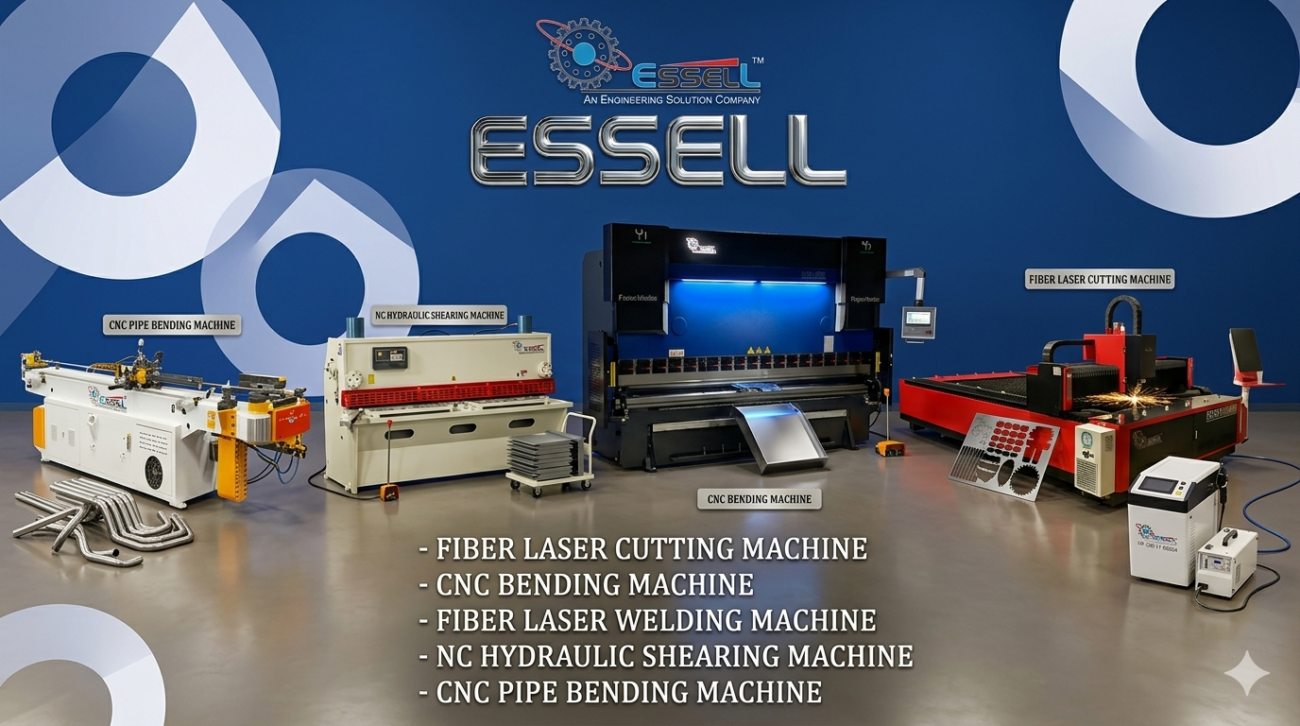
At Essell, every manufacturing solution is developed with practical industrial applications in mind. Instead of supplying standalone equipment, Essell helps businesses establish production environments that support accuracy, efficiency, and long-term operational growth.
Essell provides:
- advanced CNC fabrication solutions
- precision laser cutting technology
- application-focused engineering support
- dependable machine performance
- responsive technical assistance
- scalable manufacturing solutions
By understanding customer production objectives and recommending suitable technologies, Essell enables manufacturers to build efficient fabrication systems capable of handling today’s challenges and tomorrow’s opportunities.
Conclusion
Integrating CNC and laser systems is more than connecting two machines—it is about creating a coordinated manufacturing ecosystem where every process contributes to greater efficiency, precision, and productivity.
Businesses that carefully plan workflows, standardize programming, improve material movement, and invest in automation can successfully manage even the most demanding fabrication projects.
With advanced manufacturing solutions and technical expertise from Essell, organizations can develop integrated production systems that support consistent quality, operational efficiency, and sustainable business growth.